 Shop now, pay later in 4 easy installments

A guide to glossy and satin photo paper for printing, fridge magnets, and flexible magnets
Selecting the right photo paper can have a big impact on the quality of your finished prints - whether you’re printing personal photos, working on craft projects, producing business materials, or creating photo magnets.
Not all photo papers perform the same way. Differences in weight, surface coating, and finish can affect colour vibrancy, durability, and even how easy the paper is to handle during cutting or assembly.
Most photo papers are designed specifically for inkjet printers, using specialised coatings that help the ink absorb properly while maintaining sharp detail, strong colour, and quick drying times.
In this article, we’ll compare three commonly used photo paper types:
- 115gsm glossy photo paper
- 120gsm double-sided glossy photo paper
- 260gsm satin (semi-gloss / resin coated) photo paper
We’ll also explore how each type performs when used for fridge magnets and flexible magnets, so you can decide which option best suits your project.
What does GSM mean in photo paper?
GSM stands for grams per square metre and refers to the weight of the paper.
Generally speaking:
- Lower GSM (100–130gsm) papers are thinner, more flexible, and easier to layer with other materials
- Higher GSM (200–300gsm) papers are thicker, sturdier, and more durable
The best choice depends on how the print will be used.
115gsm glossy photo paper
Key characteristics:
- Lightweight glossy surface
- Smooth coated finish
- Vibrant colour output
- Flexible and easy to trim
- Cost-effective for larger print runs
115gsm glossy paper is a popular option when you need a thin print that still delivers good image quality.
Best uses:
- Home photo printing
- Fridge magnet inserts (with protective layer)
- Scrapbooking and crafts
- Educational materials
- High-volume printing projects
Magnet making application:
For metal shell photo magnets, 115gsm performs particularly well.
In shell magnet construction, the printed image becomes one layer within a multi-component structure - typically combined with metal shells, cardboard or acrylic inserts, and a protective mylar film. Because of this layered design, thinner paper works better than heavier stock.
Its flexibility allows it to sit neatly inside the magnet components while still producing strong colour beneath the protective cover. Since the top layer provides the durability, the paper itself does not need to be heavy- making lighter GSM a practical choice.
120gsm double-sided glossy photo paper
Key characteristics:
- Gloss coating on both sides
- No need to determine which side to print on
- Slightly heavier than 115gsm
- Consistent image quality regardless of orientation
- Easy to handle during cutting
One of the biggest advantages of double-sided paper is convenience. You can load it without worrying about the printable side, which reduces errors and wasted sheets.
Best uses:
- Photo printing
- Double-sided projects
- Flyers or inserts
- Magnet making
Magnet making application:
120gsm double-sided paper is also very suitable for shell-style magnets.
Because both sides are printable, the risk of loading errors is removed, which can help minimise waste during production. The slightly increased weight compared to 115gsm also makes the paper easier to handle when trimming or assembling, while remaining thin enough to fit comfortably within layered magnet components.
For makers producing magnets regularly, this combination of ease-of-use and reliability can make the workflow more efficient and consistent.
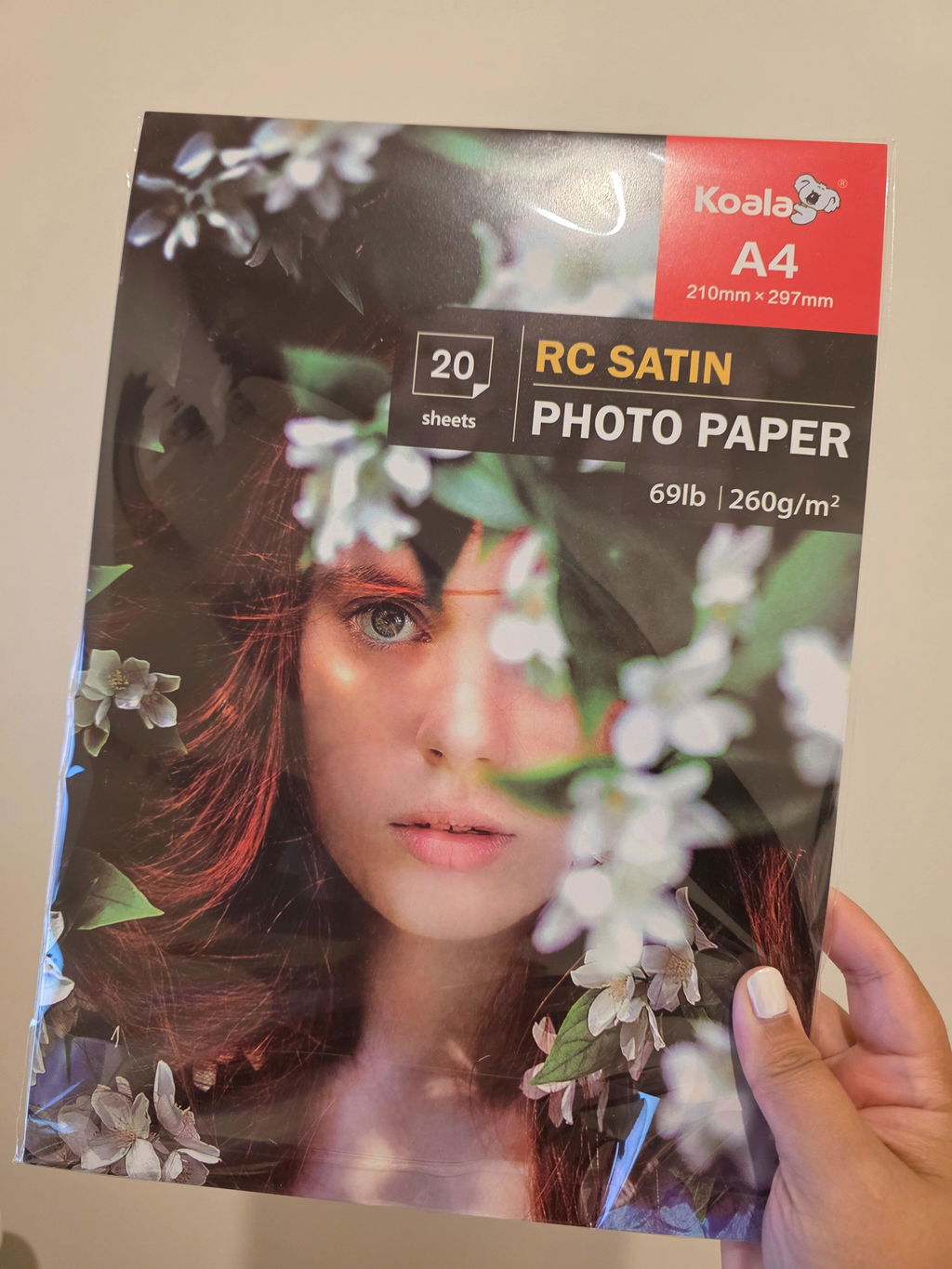
260gsm satin (semi-gloss / resin coated) photo paper
Key Characteristics:
- Thick, premium-feeling paper
- Satin / semi-gloss finish with reduced glare
- Improved moisture and handling resistance compared with standard glossy photo papers
- Durable resin-coated surface suitable for many applications where a separate protective overlay is not required.
260gsm satin paper is typically resin-coated (RC). This means the surface includes protective resin layers that help improve resistance to moisture, everyday handling, and surface wear while enhancing colour stability, giving it a finish more comparable to professional photo lab prints than standard glossy inkjet papers.
The satin surface also reduces reflections while still maintaining excellent colour depth.
Best uses:
- Professional photo prints
- Artwork and photography
- Flexible magnets and photo magnets
- Save-the-date and announcement magnets
- Invitations and event stationery
- Business and promotional materials
- Premium craft projects
- Prints that benefit from improved durability without lamination
Flexible magnet application:
260gsm satin paper works particularly well for flexible magnet projects because its heavier weight provides additional structure while the resin-coated surface offers improved durability for everyday indoor use.
Unlike thinner papers commonly used in shell magnets, the resin-coated surface makes it suitable for use directly on flexible magnet sheets without requiring a separate protective layer in many applications. The heavier weight also helps reduce curling and gives the finished magnet a more substantial feel.
This makes it a great choice for magnets that may be handled regularly or used in environments such as kitchens, offices, classrooms, or promotional settings.
Glossy vs Satin: what’s the difference?
Glossy paper:
- High shine finish
- Strong colour contrast
- Reflective surface
- Often preferred for vibrant images and photo magnets
Satin / semi-gloss paper:
- Soft sheen with less reflection
- More professional appearance
- Less prone to showing fingerprints
- Generally more durable than standard glossy inkjet papers
- Popular for flexible magnets and printed keepsakes
Neither finish is inherently better - the right choice depends on your intended use.
Durability comparison
| Feature | 115gsm glossy | 120gsm double-sided | 260gsm satin |
| Thickness | Thin | Thin-Medium | Thick |
| Flexibility | High | High | Moderate |
| Moisture resistance | Low (needs protection) | Low (needs protection) | Improved |
| Surface durability | Low | Low | Improved |
| Professional feel | Moderate | Moderate | High |
| Magnet shell use | Excellent | Excellent | Less suitable |
| Flexible magnet use | Possible but thin | Possible but thin | Excellent |
Which photo paper should you choose?
Choose 115gsm glossy if you:
- Need lightweight paper
- Create layered shell magnets with protective covers
- Print in larger quantities
- Want a cost-effective option
Choose 120gsm double-sided glossy if you:
- Want convenience without worrying about which side to print on
- Make magnets regularly
- Prefer slightly easier handling during cutting
- Value workflow efficiency
Choose 260gsm satin if you:
- Want a thicker, more premium finish
- Create flexible magnets
- Prefer improved resistance to moisture and everyday handling
- Want a more durable surface for flexible magnet applications
- Prefer a less reflective surface
Final thoughts
The most suitable photo paper always depends on how you plan to use it.
For magnet makers in particular:
- 115gsm and 120gsm are ideal for layered shell magnet designs with protective covers
- 260gsm satin works best for flexible magnets where durability and structure are important
Understanding these differences can help reduce trial and error, minimise wasted materials, and improve overall results.
When the paper matches the application, the entire process from printing through to assembly becomes much smoother.
If you’re creating photo magnets or craft products, choosing the right paper can make a noticeable difference to both your workflow and the final finish.
Related Articles:
-
7 reasons your photo prints look dull (and how to fix them)
-
Genuine vs Compatible ink for inkjet and EcoTank printers